
Sociable Lapwing Vanellus gregarius

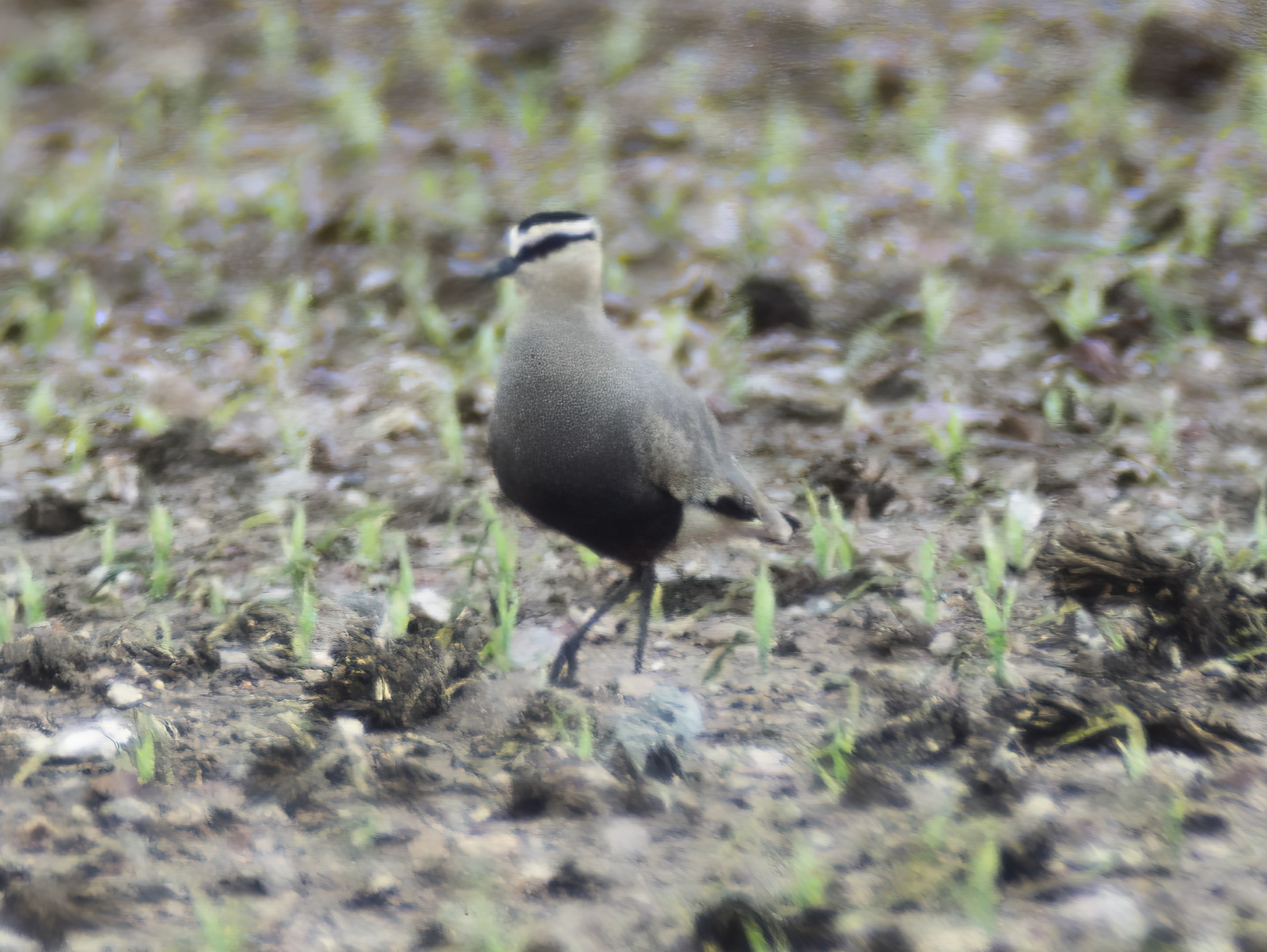
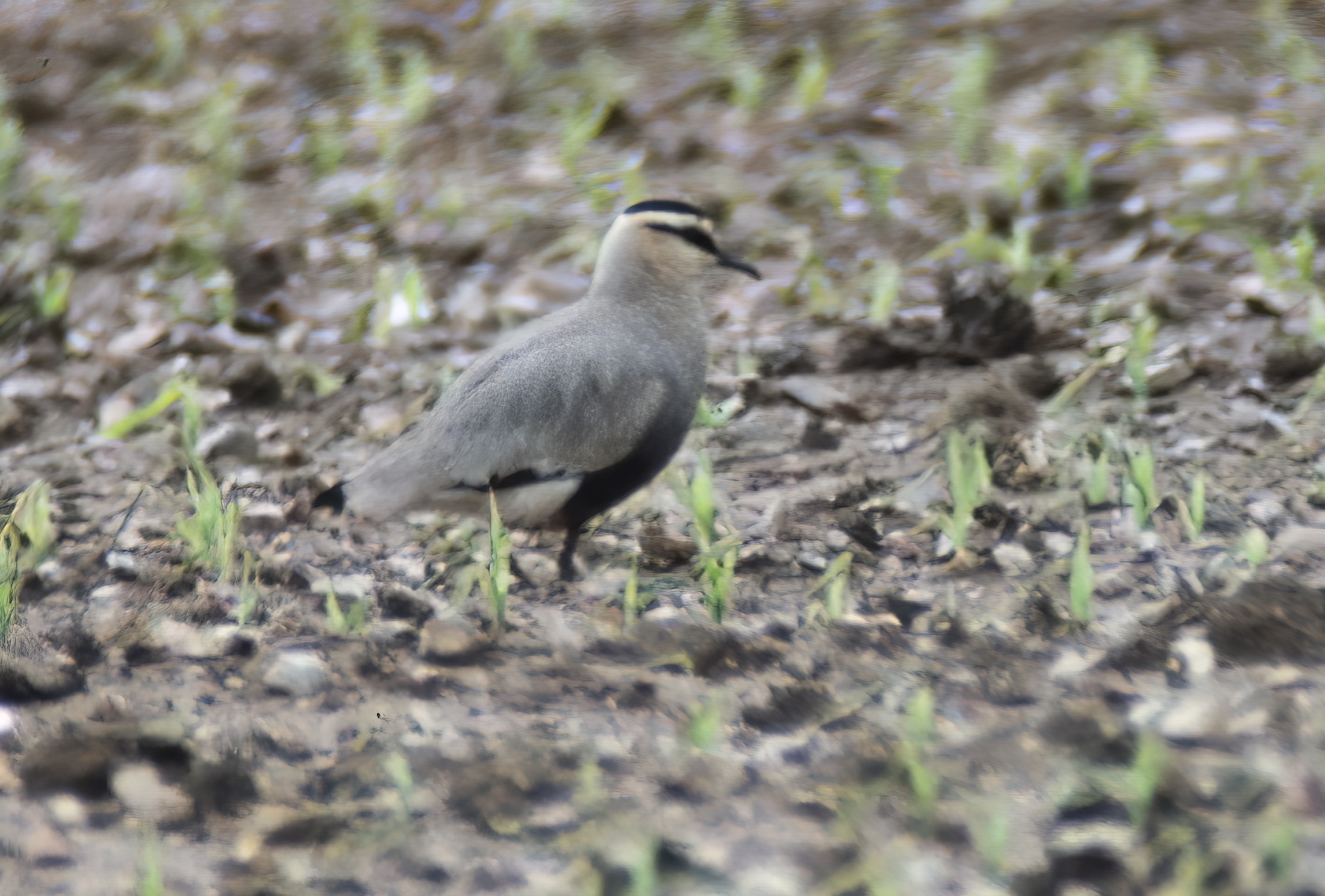
A stunning adult in summer plumage graced the fields around the Kirkby on Bain GP May 30th-Jun 2nd and again Jun 12th, 1993. Despite being seen to fly off high north on June 2nd it was briefly relocated back at Kirkby on Bain GP on Jun 12th. It was presumed to be the same individual which had previously been in Derbyshire, April 17th, and Norfolk April 21st-23rd. The species has suffered a catastrophic decline in numbers across its breeding range. In northern Kazakhstan a decline of 40% was reported during 1930–1960, with a further 50% decline during 1960–1987, together with a massive contraction in its range. The bird is considered to be globally threatened. There have been 44 British records ever, only six in Britain since 2000, the most recent two having turned up in south-west Britain - October 2008 on the Isles of Scilly and Cornwall November-December 2020.
| Site | First date | Last date | Count | Notes |
| Kirkby GP | 30/05/1993 | 02/06/1993 | 1 | Adult |
| Kirkby GP | 12/06/1993 | 1 | Same |
Finder’s report: Sociable Lapwing, at Kirkby on Bain, May 30th, 1993, first county record.
by K. Durose
Note: this account is based on the Finder’s Report which appeared in the Lincolnshire Bird Report for 1993, with reference to the original RC submission. The RC report for 1993 commented that all the spring records in 1993 were assumed to refer to the same summer-plumaged adult – it was also seen in Derbyshire, April 17th, and in Norfolk, April 21st-30th, and May 18th-20th. The majority of British records are in autumn (September/October), but most of those on the near-Continent are, like this bird, in spring. There had been three records prior to 1949, and another 32 to 1993, including this one.
Circumstances
At midday on May 30th, I arrived at Kirkby-on-Bain GP but a quick scan from the road revealed nothing unusual. I was just about to leave when I noticed Derek and Sheila Brooks, so I parked my car alongside theirs and we began chatting. A few moments later I noticed a medium-sized wader with a similar flight pattern to a juvenile Sabine’s Gull flying low over the pits. I quickly alerted DB and SB, but the bird was lost to view after about ten seconds. The bird was obviously a Sociable Plover, and a frantic search was immediately underway to try and relocate it! Almost gale force winds were whipping up the loose sandy soil and making the task very uncomfortable and at times almost impossible. However, at 13.00 hr. I relocated the plover in a newly sown field of maize about a mile south of the GP. The bird was amazingly hard to pick up when on the ground due to its cryptic colouration, in direct contrast to its striking appearance in flight. When it sat down, as it sometimes did in slight hollows in the field, it became almost impossible to see.
I released the news of the bird’s presence immediately as the views from the public road were excellent and caused no inconvenience. It remained, with short absences, in the same area until 10.00 hr. on June 2nd when it was seen to fly off high to the north. However, it was then remarkably seen again on June 12th, although it had been extensively searched for in between and not found, and similarly could not be found again later the same day. I was using 7x42 Zeiss binoculars and a 30x77 telescope and I watched it for about an hour down to 30m.
Description
General appearance – associated loosely with Lapwings, being similar in height but slighter in build to that species.
Head – a black line ran from the base of the bill, at the gape, through the lores to the eye, being at its widest just before and around the eye, then narrowing behind the eye and reaching back to the rear of the upper ear coverts where it ended abruptly. White forecrown and broad supercilia which extended right back to the nape where they joined at the rear, being slightly more buffy tinged on the rear crown and fading on the lower border into the colour of the nape. A very neat sharply defined and solid, almost shiny, black cap contrasted with the white supercilia.
Upperparts – nape, mantle, back, scapulars and tertials all a pale sandy grey-brown, the tertials overlapping most of the flight feathers but the extreme tips of the primaries showing as a black tip. Also present was a black line under the edge of the mid-wing, the wing coverts being similar in colour to the upperparts but with quite obvious pale buff fringes.
Underparts – chin and throat and cheeks/ear coverts all a beautiful ochre colour fading almost imperceptibly into the mauve-tinged pale sandy grey-brown of the lower neck and upper breast. This colouration gradually darkened down the lower breast to become black on the belly, from the bend of the wing back to the legs where it then took on a rich chestnut colour at the rear edge, this colour then extending back in a wedge between the legs. Rest of underparts from legs back to undertail coverts was creamy white.
Bare parts – bill quite fine but of typical length for a Vanellus sp. and blackish-grey in colour. Legs long, grey-black, projected beyond the tail in flight.
In flight - from below strong contrasts of black primaries against white of the rest of the underwing and then dark belly and white undertail coverts. From above, the primaries were black, secondaries white, forewing coverts and mantle/back all sandy grey-brown, tail white with black subterminal band confined to central tail feathers with white outer edge and narrow white tip.
Voice – a rasping ‘krech’; when chased by Lapwings gave a sharp ‘chetsh-chetsh’, not loud or striking.
Discussion
As mentioned in the Note to this account, the bird was also seen in Derbyshire and Norfolk, but the report of one flying over Ditchford (Northants) which KD mentions in his original account was not accepted by the RC.
The species was a long-expected addition to the county list but a full summer-plumaged bird in late spring was most unexpected. Such a stunning bird, probably a male judging from the intensity of the black on the crown and belly, made many people’s spring and maybe their year. But what was an adult Sociable Plover doing in deepest Lincolnshire at a time when it should have been breeding on the steppes of Central Asia? Van den Berg (1984) quoted the work of van de Weghe (1962) who suggested that Sociable Plovers join west-bound flocks of Lapwing during their autumn migration and thus arrive in western Europe with Lapwings in late autumn and winter. The majority of British records are during this period but most of those in continental Europe are in the spring. The suggested explanation for this difference in occurrence patterns is based upon the fact that east-bound flocks of wintering Lapwing leave Britain during February-March, birds which have wintered further south also bypass Britain as they pass eastwards, and the spring records in Europe occur as these flocks stopover in the Low Countries before continuing their return migration. Summer records are associated with non-breeding spring adults stopping off en route to their breeding areas, or to early summer movements again in association with failed or non-breeding breeding flocks of Lapwings. In the context of Lincolnshire record, the winter of 1992-1993 was very mild and most of the wintering Lapwings had left by late February but interestingly the first northward-bound flock of Lapwings at Immingham was recorded on May 29th, the day prior to the Sociable Plover’s arrival. It would be interesting to know if other flocks of Lapwings were on the move the same day and where they originated from.
Reference
Van den Berg, A. (1984). Occurrence of Sociable Plover in western Europe. Dutch Birding 6 (1): 1-8.
(Account as per new Birds of Lincolnshire (2021), included September 2022)